

Audience research
Part of Creator contracts audience research, desk data or real interviews?
Creator contracts buyer personas, marketing fiction or research tool?
Build creator contracts buyer personas from lawful research: UK data rules, four buyer types and a four-step method for England-based sales teams.
What to take away
- A brand manager in Manchester signing three creators a month cares about indemnities and delivery dates, not your persona's favourite podcast.
- Personas built from ICO-compliant research beat personas built from hunches, because UK data law constrains what you may collect and keep.
- Four or five buyer personas is usually enough for a sponsorship agreement sales page; more fragments the message.
- Each persona should name the clause that buyer negotiates hardest, since that drives the sale.
- Regulatory context matters: the ASA expects marketers to know the rules before briefing creators.
Marketing fiction or research tool? The short answer
Buyer personas for creator contracts are a research tool, not a fiction — but only when they are built from deals you have actually run. A persona that describes tastes rather than clauses is marketing fiction: it cannot tell you what stalls a negotiation. A persona built from interviews, your own deal history and a clause-by-clause view of the sponsorship agreement is a working tool, and it shortens the sales cycle. The test is blunt: if the persona cannot name the clause that buyer negotiates hardest and the disclosure question they ask, it is fiction.
Why buyer personas keep failing in creator contracts
Most creator contracts buyer personas are written by people who have never negotiated one. They describe a marketing director who loves authenticity and hates paperwork. That says nothing about which clause will stall a deal.
A sponsorship manager at a mid-sized retailer may sign ten creators a quarter. Their worry is not brand fit; it is whether the contract survives a campaign that underperforms.
Personas also fail when they ignore the legal frame. Under the Data Protection Act 2018, personal data you hold about named buyers has to be justified like any other data. The UK GDPR supplies the lawful bases for processing it and the retention principle that sits behind both. That does not stop research, but it shapes how you store it and how long you keep it.
What counts as lawful research in England
Interviewing buyers about their contract habits is market research, not direct marketing. The distinction matters because the ICO direct marketing guidance sets out when you need consent to contact people and when you do not.
If you record an interview, the recording is personal data. Keep it only as long as you need it, and say so when you ask for consent. Anonymised notes are easier to hold and still support persona work.
You can also research without speaking to anyone. Public filings at Companies House, trade press and your own CRM notes can all feed a persona. Blend those desk sources with primary interviews rather than leaning on one alone.
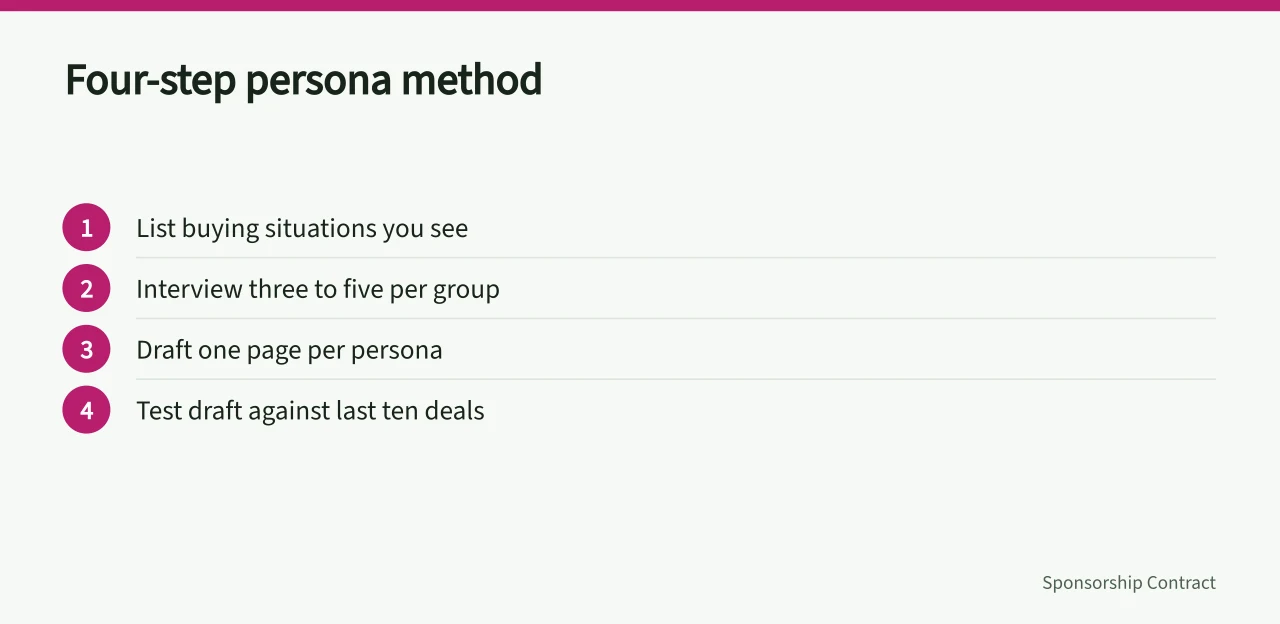
A four-step method for building personas
- List the buying situations you actually see. Group them by deal size, sector and who signs off.
- Interview three to five people per group. Ask what clause they push back on first.
- Draft one page per persona. Include the clause, the approval chain and the disclosure question they ask.
- Test the draft against your last ten deals. Cut any persona that explains none of them.
The third step is where most teams stall. If a persona does not mention advertising disclosure, it will not help you sell. The ASA's AdviceOnline library of detailed regulatory guidance for marketers is the reference buyers expect you to know. The rule to quote is CAP Code rule 2.1: marketing communications must be obviously identifiable as such. In practice that means an up-front label — '#ad', 'Ad' or the platform's 'paid partnership' tag — placed where the audience sees it before they engage. The CMA's influencer guidance, and the joint ASA and CMA Influencer's guide to making clear that ads are ads, set out the same duty.
Once drafts exist, you need a repeatable way to collect feedback. A short survey sent after each deal keeps personas current; a form builder such as Google Forms or SurveyMonkey is enough to run the loop. Ask two questions: which clause did you push back on, and what disclosure wording did you need?
Persona for a first-time brand buyer
This buyer has run one creator campaign, usually through an agency. They ask whether the sponsorship agreement covers a creator who posts late. They want a simple termination clause and a plain-English disclosure note. Clause by clause they push hardest on delivery dates and late-post remedies, then on the termination clause, then on whether the disclosure wording in the brief matches what the creator actually publishes. Their disclosure question is simply: who checks that the label went on?
Persona for a repeat buyer
This buyer runs a standing roster and negotiates exclusivity windows. They ask about usage rights after the campaign ends. They will accept a longer contract if the disclosure wording is fixed and auditable. Clause by clause they open with exclusivity windows — how long, and in which product categories — then usage rights after the campaign ends, then the record showing when the disclosure label went live. Their disclosure question is: can you show me the audit trail?
Persona for an agency buyer
Agencies sign on behalf of brands and care about where liability lands. They negotiate an indemnity that passes risk to the creator, a delivery schedule with fixed post dates, and a disclosure note they can forward to the client unchanged. They ask whether the contract lets them swap a creator mid-campaign without breaching the exclusivity window.
Persona for a regulated-sector buyer
Buyers in finance, health and alcohol work under extra promotion rules, so they read the disclosure clause before the fee. They negotiate a fixed label, a pre-approval step for every post, and a termination clause that triggers if a regulator objects. Their disclosure question is the strictest: who signs off the wording, and how fast can a post come down?
Numbers you can defend
Persona work invites invented statistics. Avoid them. If you want a size claim, use a published figure and name its source and date.
Defensible persona numbers
- £400monthly research tool spend example
- 0invented statistics to avoid
Otherwise label the number as illustrative. For example, a team paying £400 a month for a research tool should treat that spend as a planning example, not a market rate.
This is general guidance, not legal advice. Individual cases, especially those involving personal data or regulated promotions, need a qualified adviser.
Common questions
How many buyer personas do we need for creator contracts?
Four or five usually covers the deals a small team handles. Add one only when a new buying situation appears repeatedly in your pipeline and none of the existing personas explains it.
Can we build personas from existing client data?
Yes, if the data was collected for a lawful purpose and you are not repurposing it for marketing without a basis. Check your privacy notice and retention schedule before you start.
Do personas need to cover disclosure rules?
Yes. Disclosure sits inside almost every creator negotiation, so each persona should record the specific question that buyer asks about labelling paid content.